Rates & availability change: Sumba Helicopter Tours is an independent travel and concierge service that connects you to vetted drivers and partners — we are not a government body. All prices are RANGES (IDR/USD) flagged with the date last verified and separate the base service from fuel, parking, and extras; confirm current rates, vehicle, and availability before booking. Bali charges an international tourist levy of IDR 150,000 per person. If you proceed with a partner we introduce, they may pay us a referral fee at no extra cost to you.
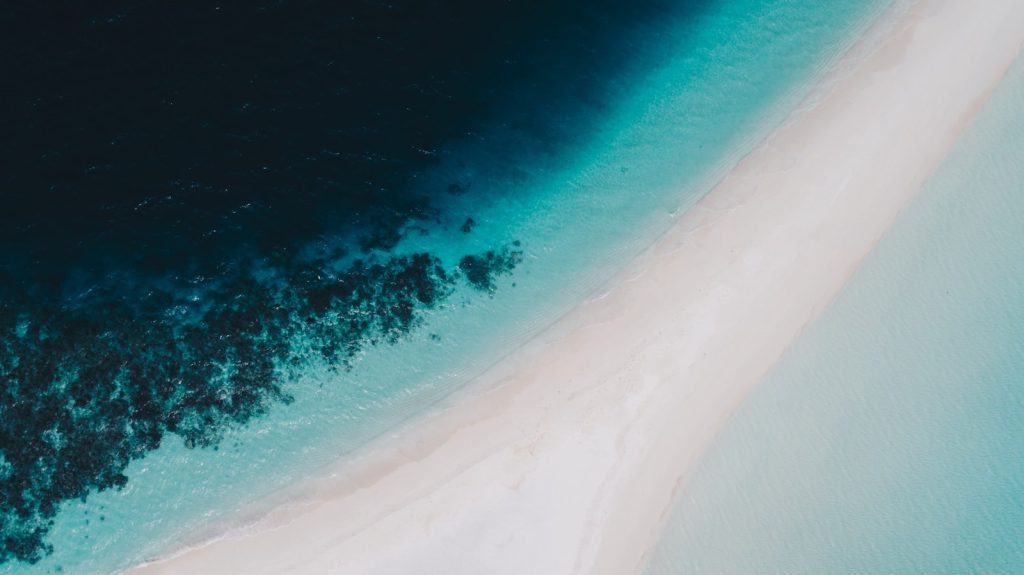
Weekuri Lagoon is a turquoise saltwater lagoon in West Sumba, Indonesia, framed by coral cliffs and white sand and fed by the Indian Ocean through underwater fissures. From the air, weekuri lagoon appears as a luminous, irregular oval of blue and green set against dry savannah, reefs, and pounding surf.
What Is Weekuri Lagoon – And Why See It From the Air?
On the ground, Weekuri Lagoon (often written “Weekuri Sumba”) is a calm, shallow lagoon for swimming and cliff-jumping, roughly 30–40 km west of Tambolaka in Southwest Sumba. It is separated from the ocean by jagged limestone and reef, so you float in clear, mineral-blue water while waves crash just beyond the rocks.
From above, Weekuri becomes something else entirely. The contrast between pale limestone, bright aquamarine shallows and deep cobalt pockets is far more visible from the air than at water level. You can see:
- The complete shape of the lagoon and its narrow rock “wall” separating it from the open sea.
- The way ocean swells wrap around the headland, sending white plumes against black reef.
- Differing depths as colour bands – milky turquoise shelves layered over darker holes.
- The vast, tawny savannah of West Sumba stretching inland, dotted with traditional villages.
That sense of context – lagoon, cliffs, reefs, savannah, villages – only really arrives once you’re in the air.
Where Weekuri Lagoon Sits on the West Sumba Coast
This west Sumba lagoon lies on the south-western fringe of the island’s “tail”, a short drive and an even shorter flight from Tambolaka Airport (TMC). It is part of a rugged coastline of coves and blowholes, with relatively dry, open hills rolling inland.
- Region
- Southwest Sumba (Kabupaten Sumba Barat Daya), West Sumba, Indonesia
- Nearest airport
- Tambolaka (TMC), approx. 30–40 minutes by car; less than 10 minutes by helicopter
- Water type
- Saltwater (fed by the Indian Ocean through underground channels)
- Best colour conditions
- Late morning to early afternoon on clear days, mid–tide or higher
From Tambolaka, the road skirts villages, coconut groves and patches of savannah before reaching Weekuri’s small carpark. A short walk over coral rock brings you to view platforms and rustic stairs down to the water. Helicopters bypass the road entirely, following the coast for an aerial perspective before circling the lagoon itself.
What Weekuri Lagoon Looks Like From a Helicopter
Weekuri aerial views are about contrast. Sumba’s west coast is generally dry and ochre-toned, with hardy shrubs and low trees. Weekuri interrupts this palette with a vivid splash of water.
Colour and Clarity From Above
In the air you see:
- Shallow rims: Almost neon turquoise, especially under midday sun.
- Central pockets: Deeper blues where the lagoon floor drops away.
- Reef and surge channels: Dark, textured ribbons showing where the ocean feeds the lagoon through rock gaps.
- White surf lines: Constant, rhythmic foam where swells break on the outer reef.
On especially clear days the lagoon’s floor – pale sand, scattered rocks, occasional seaweed patches – becomes visible from surprisingly high altitude.
Shape, Scale, and Surroundings
Weekuri is not large. From above, most passengers can take in the entire lagoon in a single glance:
- An elongated, irregular bowl, semi-enclosed by low limestone cliffs.
- A few wooden decks and pathways visible on the rock fringe.
- Pockets of coastal forest giving way quickly to dry grassland.
- Traditional Sumba houses with high, peaked roofs (uma bokulu) scattered inland.
The compact size means a helicopter can orbit slowly, giving each side of the aircraft a clear, unobstructed view.
Seasonal Differences You May Notice From the Air
From a helicopter, seasonal patterns show up at a glance:
- Dry season (roughly May–October): Landscape turns golden-brown; visibility is typically crisp; the lagoon colour is intense against drier hills.
- Transitional months: You might see local farmers burning fields, sending thin smoke plumes across the savannah – an atmospheric detail, but sometimes a factor for photography.
- Rainy season (roughly November–April): Hills shift to a richer green; you may see more cloud build-up and showers near the coast. Lagoon clarity can still be excellent, but conditions vary day to day.
Flying is always weather-dependent and never guaranteed. Cloud, rain or wind can change the itinerary or make aerial photography more challenging on a given day.
Helicopter Routes That Include Weekuri Lagoon
As an independent helicopter-tour and transfer service, we work with vetted operators who can design several types of itineraries around Weekuri Sumba. The exact routing depends on aircraft availability, weather, and where you are staying, but typical patterns look like this:
Tambolaka–Weekuri Scenic Circuit
This is the most direct way to experience Weekuri from the air if you are already in West Sumba.
- Typical duration: Around 20–30 minutes in the air.
- Outline: Depart Tambolaka → follow coast west or south-west → low pass along reefs → orbit Weekuri Lagoon → return via inland savannah and villages.
- Who it suits: Travellers with limited time in West Sumba, or guests based near Tambolaka who want a focused west Sumba lagoon experience rather than a full-island flight.
West Coast Highlights Flight (Lagoon + Beaches + Cliffs)
Some guests prefer to include Weekuri as one stop in a longer west-coast helicopter tour.
- Typical duration: About 45–75 minutes airborne, depending on route.
- Outline: Tambolaka departure → coastal cliffs → surf breaks and reefs → Weekuri Lagoon orbit → nearby beaches and blowholes → savannah flyover → return.
- Who it suits: First-time visitors wanting a broad sense of West Sumba’s coastline and inland terrain, not just one site.
Resort-to-Resort Transfers With Weekuri Add-On
If you are staying at a high-end resort elsewhere on Sumba, it is often possible to include a Weekuri aerial circuit as part of a point-to-point transfer. For instance:
- A transfer between a remote south-coast property and Tambolaka, extended slightly to include a Weekuri loop.
- A multi-stop day where you fly from a resort to an inland waterfall, continue to Weekuri lagoon for a scenic orbit, then land near another west-coast property.
These are always customised. They depend on landing permissions, daylight, and helicopter positioning on the day.
If you would like to explore options that fit your specific itinerary, you can plan your trip with our team via email or WhatsApp; we share practical route ideas and connect you to suitable operators.
What a Weekuri Aerial Experience Feels Like
Cabin Experience & Views
Most helicopters used in Sumba sightseeing and transfers are light or medium twins or singles with large windows and headsets for every passenger. We cannot list specific aircraft models here because these vary by operator and date, but the principles are similar:
- Pilots typically brief you on the route and will try to give both sides of the helicopter time over key sights.
- Communications run through noise-cancelling headsets so you can hear commentary and talk to each other without raising your voice.
- Doors generally remain on for safety and comfort unless you have arranged a specialised photo flight with the operator.
Noise, Motion, and Comfort
First-time helicopter guests often ask about comfort. In practice:
- Noise is noticeable but manageable with headsets.
- Motion tends to be smooth in good conditions, with some vibration and slight banking on turns.
- For shorter Weekuri circuits, many guests compare it to a short scenic flight rather than a long expedition.
Those prone to motion sensitivity may wish to sit nearer the centre of gravity (usually front seats) and avoid flying on very windy days; the operator can advise case-by-case.
Photography Tips for Weekuri Lagoon From the Air
Weekuri’s colours favour good light. To maximise results:
- Time of day: Late morning to early afternoon generally gives stronger blues; too low an angle can cause heavy shadow from the limestone rim.
- Lens choice: Many travellers are content with a smartphone; if using a camera, a mid-range zoom often works best (e.g. equivalent of 24–70mm).
- Polariser caution: A polarising filter can reduce glare but may interact unpredictably with curved helicopter windows. Test before you commit.
- Clothing: Dark, non-reflective clothing helps reduce your own reflection in window shots.
Most importantly, take a few frames, then look up. Weekuri is one of those places that rewards a moment without a lens between you and the view.
Helicopter vs. Road: How Does the Experience Compare?
| Aspect | Helicopter (Weekuri Aerial) | Road Visit (By Car) |
|---|---|---|
| Perspective | Complete view of lagoon, reefs, and coastline; strong sense of scale and context. | Eye-level immersion: swimming, cliff-jumping, feeling the water and rock textures. |
| Time efficiency | Lagoon visible within minutes of departure from Tambolaka. | Typically 1–1.5 hours each way by car from Tambolaka, depending on conditions. |
| Comfort | Smooth, fast transit; no dust or rough roads; some noise and vibration. | Subject to heat, dust, and road quality; straightforward but longer. |
| Activities | Primarily visual and photographic; no water entry from aircraft. | Swimming, wading, jumping from low rocks (at your own risk), walking the rim. |
| Weather sensitivity | Highly weather-dependent; flights may be rescheduled or cancelled for safety. | More tolerant of marginal weather, though heavy rain still affects conditions. |
| Cost level | Significantly higher; helicopter charter pricing. | Low to moderate; car, fuel, and local guiding. |
For many high-end travellers, the ideal is to combine both: an aerial pass to see Weekuri in its full context, then a separate day overland to swim and spend unhurried time on the rocks.
Indicative Pricing for Helicopter Access to Weekuri (Last Verified June 2026)
Helicopter pricing in Indonesia is variable. It depends on aircraft type, base location, flying hours (including ferry time to reach you), fuel costs, and operational factors. Below are broad estimates, last verified June 2026 in the wider Indonesia private-aviation market and subject to confirmation by the operator you choose.
Typical Private Charter Ranges
- Short scenic circuit from Tambolaka (Weekuri-focused, private use):
Approx. USD 2,500–4,000 total for the aircraft for a ~20–30 minute flight block time. - Extended west-coast highlights flight with Weekuri (45–75 minutes block):
Approx. USD 3,500–7,000 total, depending on routing and aircraft class. - Point-to-point transfer with Weekuri loop en route:
Highly itinerary-specific, but usually starting from around USD 4,000–8,000+ per aircraft for same-day repositioning and scenic detours.
These are indicative only, not fixed offers. Final quotes will vary and are always confirmed by the operator before you commit. Many helicopters have 4–6 passenger seats (sometimes more), so per-person cost drops as you share the charter, though weight limits and luggage may constrain capacity.
If you would like a current quote that matches your dates, group size, and starting point, please plan your trip with us. We discuss options transparently over email or WhatsApp and then introduce you to a vetted operator. No one can pay to change what we publish; if you proceed with our partner they may pay us a referral fee at no extra cost to you.
Practicalities: Safety, Weather and Seasonality
Safety and Regulation
We are not an airline, aviation authority, or helicopter operator. Our role is to connect you with properly licensed operators who:
- Hold current Indonesian operating approvals for their aircraft.
- Provide qualified pilots experienced in local conditions.
- Observe weight-and-balance limits and standard safety procedures.
On the day of flight, the captain has the final say on routing and altitude based on weather, airspace, and safety considerations. They may alter or shorten a Weekuri lagoon orbit if conditions demand it.
Weather: What Can Affect a Weekuri Aerial Flight
West Sumba enjoys many clear days, but conditions are never guaranteed. Factors that may influence your flight include:
- Wind: Strong coastal winds can limit how low or how close to cliffs a helicopter can safely fly.
- Storm cells and heavy rain: These may force route changes inland or lead to postponement or cancellation.
- Visibility: Haze, smoke from land-burning, or low cloud can reduce clarity of Weekuri’s colours.
Operators typically brief you a day prior and again on the day itself. Contingency plans might include adjusting timing, modifying the route, or shifting to a different day if your schedule allows. Refund or rebooking policies vary by operator.
Best Time of Year to Fly Over Weekuri
Based on typical patterns on Sumba:
- June–September: Usually the most reliable for flying – drier, with frequent clear skies and good definition over the savannah.
- Shoulder months (April–May, October–early November): Often excellent too, with more greenery ashore. A little more variability in showers.
- Peak rainy season (late November–March): Lush landscapes, but more days written off by low cloud or strong storms. Good days can still be very rewarding; flexibility is key.
Combining Weekuri With Other West Sumba Experiences
From Lagoon to Savannah and Villages
One of the advantages of helicopter access is how quickly you can transition between environments. Popular combinations (always subject to feasibility and permissions) include:
- Weekuri + traditional hilltop villages: From the air you see village layouts, megalithic stone tombs and the geometry of thatched roofs. Some itineraries pair an aerial pass with a ground visit arranged separately by your resort or guide.
- Weekuri + savannah ridges: A gentle climb inland reveals rolling hills, seasonal rivers and the sense of Sumba as a “little continent” rather than a single coastline.
- Weekuri + remote beaches: Short additional legs along the coast can reveal small coves and surf points hard to reach by road.
Heli In, Road Out (or Vice Versa)
High-end travellers sometimes design their day so that one leg is airborne and the other by vehicle, creating variety of perspective and pacing. For example:
- Morning helicopter scenic flight around Weekuri → land near Tambolaka → leisurely lunch → afternoon by car to villages or a beach.
- Road trip from Tambolaka to Weekuri with swimming and photos → late-afternoon pick-up by helicopter for a coastal sunset circuit back to your resort (where landing permissions and day-light allow).
Your ground operator or resort usually arranges local guiding, vehicles, and picnic setups, while we focus on the air segment and coordination with the helicopter provider.
Who a Weekuri Lagoon Flight Is (and Is Not) For
Ideal Guests
A Weekuri aerial experience tends to resonate with:
- Travellers who value perspective: People who enjoy seeing how landscapes fit together – lagoon, reef, savannah, villages – in a single sweep.
- Photographers and visual creatives: Those for whom colour, texture and composition matter, and who want access to angles impossible from the ground.
- Time-poor but curious guests: If you have one or two days on Sumba and wish to see as much as possible without long drives, the helicopter option condenses distance.
- Families and small private groups: A shared, contained experience without crowds, tailored to your own schedule.
Who May Be Better Served By a Ground Visit Only
A helicopter is not always the right tool. A purely overland trip to Weekuri may suit if:
- Your priority is swimming and lingering rather than aerial views.
- You prefer to minimise carbon footprint and cost, accepting longer travel times by road.
- Your schedule is very rigid and you cannot accommodate weather-related changes; road itineraries are generally slightly more predictable.
There is no single “correct” way to see Weekuri. Many guests find that pairing a modest, well-timed helicopter circuit with a slower ground visit provides the deepest understanding of the place.
Planning Your Weekuri Helicopter Experience
Information to Have Ready
To get a clear, operator-backed quote and feasible routing, it helps to share:
- Your preferred travel dates and how flexible they are.
- Where you will be staying the night before and after the flight.
- Number of guests, approximate weights, and any children’s ages.
- Whether you want a short Weekuri-focused orbit or a more extensive coastal/inland tour.
- Any particular photography needs (for example, documentary crew, heavy equipment).
How We Fit Into the Process
Our role as Sumba Helicopter Tours is curation and connection:
- We listen to your priorities, then outline realistic aerial options that suit Sumba’s geography and flying conditions.
- We introduce you to vetted helicopter operators who hold the relevant licences and can confirm aircraft, crew, and detailed pricing.
- We stay transparent: no one can pay to change what we publish; if you decide to fly with a partner we have referred, they may pay us a referral fee at no extra cost to you.
To start shaping a Weekuri lagoon flight that matches your journey, you can plan your trip with us. Most guests find initial WhatsApp exchanges practical for quick clarifications before locking in a route and date range.
FAQ: Weekuri Lagoon From Above
Can I land directly at Weekuri Lagoon by helicopter?
In most cases flights treat Weekuri as a scenic orbit rather than a landing point. The immediate surroundings are rocky, and landing requires specific clearances and safe terrain. Some itineraries may land at nearby clearings or approved helipads with a short drive to the lagoon, but this is assessed case-by-case by the operator.
How long do we actually spend over Weekuri during a flight?
On a short scenic circuit, expect several minutes of focused orbiting, often with at least one full circle in each direction so both sides of the aircraft enjoy unobstructed views. On longer west-coast flights, Weekuri is one highlight among others, but pilots generally allocate enough time for photos and observation, subject to weather and airspace constraints.
Is a Weekuri helicopter flight suitable for young children or older travellers?
Many operators accept children and older guests, provided they can sit upright with a seatbelt and follow crew instructions. Age and health policies vary, and infants or very young children may have specific requirements. It is essential to disclose any mobility or medical concerns in advance so the operator can confirm suitability and seating arrangements.
Will I definitely see the lagoon in bright turquoise colours?
Colour intensity depends on sunlight, cloud cover, tide, and recent weather. On clear days with the sun reasonably high, Weekuri usually shows strong blue-green tones from the air. Overcast skies, low light, or surface chop can mute those colours. Neither we nor the operator can guarantee specific visual conditions, but we can suggest timings that often work best.
How far in advance should I book a Weekuri helicopter experience?
For peak periods and complex itineraries, many high-end travellers start the conversation several months ahead, especially if coordinating with resort stays and inter-island connections. Last-minute arrangements are sometimes possible, but aircraft and crew may already be committed elsewhere. Early enquiry increases the chance of aligning aircraft availability, preferred timing, and weather flexibility.