Rates & availability change: Sumba Helicopter Tours is an independent travel and concierge service that connects you to vetted drivers and partners — we are not a government body. All prices are RANGES (IDR/USD) flagged with the date last verified and separate the base service from fuel, parking, and extras; confirm current rates, vehicle, and availability before booking. Bali charges an international tourist levy of IDR 150,000 per person. If you proceed with a partner we introduce, they may pay us a referral fee at no extra cost to you.
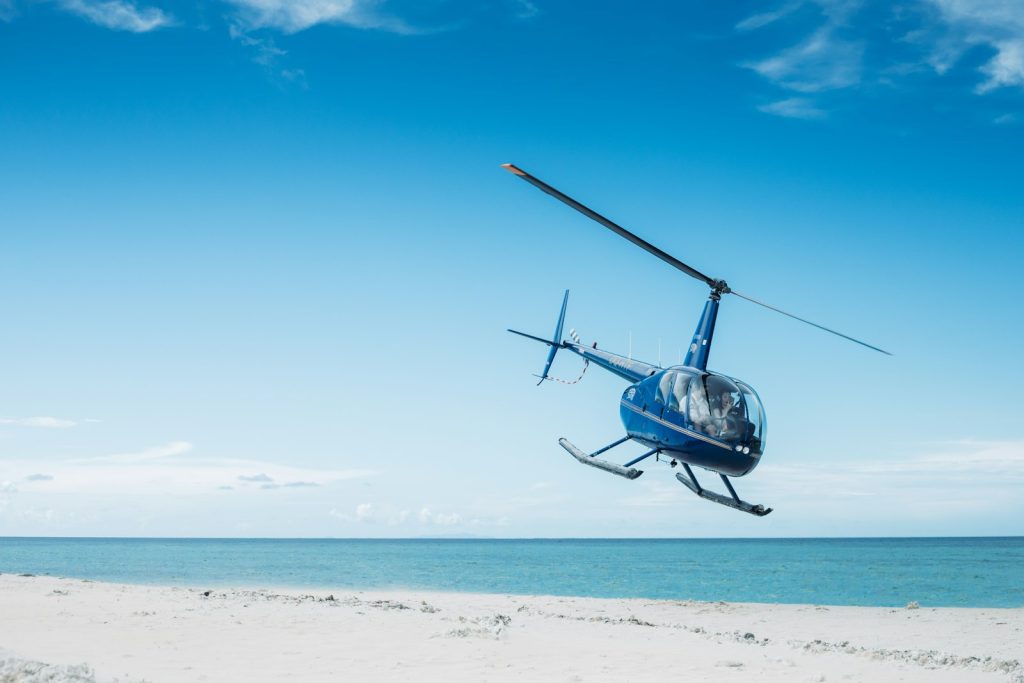
A sumba helicopter charter is a privately-booked helicopter flight over or to Sumba, tailored to your schedule, route and group size. On this page, we explain how to arrange a Sumba helicopter charter, what it typically costs, and how operations work in real-world conditions.
Independent helicopter charter service for Sumba
Sumba Helicopter Tours is an independent charter and logistics service focused solely on Sumba island and its connections to the wider Indonesian archipelago. We do not operate aircraft ourselves and we are not an airline, resort, or government body. Instead, we connect travellers to a small circle of vetted helicopter operators that regularly fly to, from, and over Sumba.
Our role is to help you:
- Clarify what is realistically possible by helicopter, given time of year, daylight, and airfield access.
- Compare private helicopter Sumba options: aircraft category, capacity, and approximate flight time.
- Understand pricing structures and typical estimate ranges (last verified June 2026).
- Coordinate with your resort, yacht, or ground agent, so transfers and scenic flights connect smoothly.
We focus on two broad use-cases:
- Point-to-point transfers – e.g. Bali–Sumba, Komodo–Sumba, or transfers between Sumba’s airports and remote lodges or boats.
- Scenic and experience flights – coastal circuits, waterfall fly-bys, surf-spot reconnaissance, and photo flights.
All helicopter operations are subject to aircraft availability, regulatory permissions, crew duty limits, and above all, weather and daylight. Flights are never guaranteed until an operator issues a formal confirmation, and even then may be rescheduled or cancelled if conditions are unsafe.
How private helicopter charter works in Sumba
Chartering a helicopter in Sumba follows the general model used across Indonesia, with a few Sumba-specific nuances.
1. Aircraft types: light single vs twin
Most charter helicopter Sumba flights use one of two broad categories:
- Light single‑engine helicopters
Common workhorses across Indonesia. Typically:- Seats: 3–4 passengers, depending on weight and luggage.
- Typical missions: short transfers, resort access, scenic flights, aerial photography.
- Advantages: lower hourly rate, can use smaller landing sites (subject to approvals).
- Considerations: weight-sensitive; range and speed below twin‑engine aircraft.
- Twin‑engine helicopters
Used for higher-capacity, longer-range or more demanding operations. Typically:- Seats: around 5–8 passengers, depending on configuration and weight.
- Typical missions: multi-passenger resort transfers, yacht rendezvous, VIP movements between islands.
- Advantages: more capacity, higher cruise speed, more space for luggage.
- Considerations: higher hourly rate; may require more formal landing facilities.
Exact aircraft models vary by operator and availability on your dates. We never publish specific tail numbers or guarantee a particular model in advance; that information comes from the operator during quotation.
2. Capacity and weight limits
Helicopter seating is only one part of the story. Each aircraft has strict maximum take-off weight limits that include passengers, luggage, fuel, and the crew. This is especially relevant for:
- Groups with significant luggage (surfboards, camera cases, hard suitcases).
- Tropical daytime operations, where heat and density altitude reduce margins.
- Longer routes that require more fuel.
On many Sumba routes, a “4-seat” helicopter may effectively carry 2–3 guests plus light bags in comfort and within weight limits. For larger groups or bulky luggage, operators may recommend:
- Upgrading to a twin‑engine helicopter.
- Splitting the group across multiple flights.
- Moving some luggage by road, fixed‑wing aircraft, or separate helicopter positioning.
3. Charged by the hour – and by positioning
Private helicopter Sumba pricing is usually based on a minimum daily flying time and a per-flight-hour rate. Two elements matter:
- Live flight time: time spent flying you and your party.
- Positioning (ferry) time: time spent flying the helicopter empty to reach your departure point, or back to its base after your trip.
This means a short scenic flight can still carry a material cost if the helicopter must be repositioned from another island or city. For example:
- If the aircraft is already based on Sumba for another mission, a 30–60 minute coastal flight may be priced on just that block of time, subject to minimums.
- If the helicopter must come from Bali, Flores, or another hub, ferry sectors can add multiple hours of billable time even for a brief excursion.
4. Minimum hours
Most Indonesian operators apply a minimum daily flight time, commonly in the range of 1–2 flight hours per day for light singles and more for twins. If your intended flying time is below the minimum, pricing usually rounds up to the minimum.
This matters for:
- Very short hops between Sumba airfields.
- Resort landings where the helicopter remains on standby.
- Photo flights where the route is tight but the aircraft must stay nearby.
5. Permissions, permits, and landing sites
Helicopters can land at Sumba’s public airports (e.g., Tambolaka and Umbu Mehang Kunda/Waingapu) subject to AirNav, airport, and operator procedures. Landings at private sites, including resorts, private villas, and ranches, are more complex and must be cleared by the operator in line with Indonesian regulations.
For non-airport landings, operators typically evaluate:
- Exact GPS coordinates and photos of the proposed landing area.
- Surface condition, dimensions, and obstacles (trees, poles, wires, structures).
- Proximity to villages, livestock, and sensitive terrain.
- Any required local permissions, landowner consents, or police notifications.
Operators have the final say on whether a site is safe and permitted. Landing approvals can affect both the feasibility and cost of your sumba heli hire, so early planning is essential.
Typical Sumba helicopter routes & use-cases
Charter helicopter Sumba flights can be tailored to your own itinerary, but a few patterns appear frequently.
Island access from Bali and beyond
For travellers flying into Bali or other regional gateways, helicopters provide a fast, direct way to reach Sumba without the schedule constraints of airlines.
- Bali (Denpasar) – Sumba (Tambolaka or Waingapu)
A popular option among time‑sensitive travellers arriving by private jet or commercial flight into Bali. Subject to aircraft performance and routing, flight time is typically in the order of 1.5–2+ hours one-way, but this varies by helicopter type, weather, and ATC. - Other Nusa Tenggara islands – Sumba
Depending on the aircraft base and your broader trip, helicopter links are sometimes arranged between Sumba and islands such as Flores (Komodo area), Sumbawa, or Lombok. These legs can be efficient if the helicopter is already nearby or assigned to a multi-day itinerary.
Airport–resort transfers on Sumba
Once on Sumba, helicopters can shorten transfer times from the island’s airports to more remote coastal or inland properties. In some cases, the time saving compared with 2–4 hour road journeys is significant; in others, ground transfer remains the more practical choice, especially for larger groups with luggage.
Typical patterns include:
- Airport to remote west or south coast stays – fast routing over rice fields, hills, or coastline.
- Airport to private villas or estates – where a suitable landing site exists and has been cleared by the operator.
Scenic and experience flights
Helicopters excel for perspective. Over Sumba, that may mean:
- Coastal circuits – tracing long arcs of beach and reef, with views of surf breaks and headlands.
- Highland and savannah flights – inland ridges, meandering rivers, and patchwork fields.
- Waterfall or canyon fly-bys – subject to safety, airspace, and environmental considerations.
- Surf reconnaissance – scanning multiple breaks to read swell lines and wind, often favoured by committed surfers travelling with boards.
- Photo and film flights – with doors closed or, if permitted by the operator and regulator, configured for specialized aerial work.
Scenic flights on Sumba often run from 30 minutes to 2 hours. Longer itineraries can be shaped as half‑day or full‑day experiences, sometimes with ground stops built in.
Yacht and liveaboard rendezvous
For yachts cruising around Sumba or along the Nusa Tenggara chain, helicopters can be used to embark or disembark guests via nearby airfields or approved shore landing sites. Direct deck landings are tightly regulated and depend on both vessel certification and operator capability; in practice, most rendezvous are shore-based or via a tender point agreed in advance.
Pricing ranges and what drives cost
Helicopter charter pricing in Indonesia is opaque compared with many Western markets. Operators rarely publish firm price lists, and costs move with fuel, maintenance cycles, and demand. The ranges below are intended as directional guidance only and are estimate ranges in USD, last verified June 2026. All actual pricing is quoted and confirmed directly by the operator for your specific dates and routing.
Typical hourly rate ranges (Indonesia context)
- Light single‑engine helicopter
- Approx. US$1,500–3,000 per flight hour (estimate range, last verified June 2026).
- Twin‑engine helicopter
- Approx. US$3,000–6,000+ per flight hour (estimate range, last verified June 2026).
These bands include aircraft, crew, and standard operating costs, but they do not necessarily include:
- 10% VAT and/or other applicable taxes.
- Airport fees, handling charges, or special landing fees at private sites.
- Positioning (ferry) hours to and from Sumba.
- Overnights for crew and aircraft if the helicopter remains on Sumba for extended periods.
Illustrative cost drivers
To understand how a quote is built, it helps to see the main variables.
| Factor | How it affects your charter helicopter Sumba quote |
|---|---|
| Aircraft category | Twin‑engine helicopters sit at the higher end of the US$3,000–6,000+ per hour range; light singles more often in the US$1,500–3,000 band (estimate ranges, last verified June 2026). |
| Positioning distance | Longer empty legs to reach Sumba raise the billable hours, especially if the helicopter is based on another island. |
| Flight duration | Longer scenic routes or multi‑stop itineraries increase total chargeable hours; most operators also apply daily minimums. |
| Waiting/standby time | If the aircraft waits on Sumba instead of returning to base, operators may price this as minimum hours or add overnight and parking charges. |
| Landing sites | Use of private sites can involve extra surveys, permissions, and possible fees, which flow through to the final quote. |
| Season and demand | Peak holiday periods, large events, or clustered yacht charters can constrict availability and increase opportunity cost. |
If you share your group size, approximate dates, and desired routing, we can help you narrow these variables and obtain operator quotes. To explore options and indicative budgets, you can plan your trip with us or request WhatsApp-based planning for faster back-and-forth.
Flight timing, seasons, and weather dependence
All helicopter flights are dependent on safe weather and sufficient daylight. Sumba is no exception.
Daylight and timing
Indonesia’s civil aviation framework and most charter operators’ internal policies limit helicopter operations to daylight hours and visual meteorological conditions (VMC). Practically, this means:
- No night sightseeing or late‑evening departures over Sumba.
- Transfers are usually planned with buffers for potential delays or weather holds.
- Multi‑leg days are sequenced to ensure the final leg lands well before dusk.
Seasonal patterns
While day‑to‑day conditions vary, Sumba sits within the broader Nusa Tenggara weather pattern:
- Drier months (broadly mid‑year) often bring clearer skies and more predictable flying windows.
- Wetter months can see more convective activity, localized storms, and lower cloud bases, especially in the afternoons.
Operators assess each flight individually using current forecasts and actual conditions. Even on clear‑looking days from the ground, factors like visibility, wind shear, and cloud layers can lead pilots to delay or cancel flights in the interest of safety.
No weather guarantees
No reputable operator can promise specific weather, and no sumba helicopter charter should be treated as guaranteed until it has:
- A written confirmation from the operator.
- Clear terms addressing weather‑related delays, re‑routing, or cancellation.
We encourage travellers to build flexibility into their itineraries—especially if a helicopter transfer connects directly to private jet slots, international flights, or yacht movements.
Planning your private helicopter Sumba experience
Thoughtful preparation can transform a helicopter ride from a mere transfer into one of the defining memories of your time on Sumba.
1. Clarify your priorities
Before we approach operators, consider what matters most to you:
- Speed vs. budget: Is the main goal reducing transfer time, or is the helicopter itself the experience?
- Views vs. directness: Would you trade the shortest routing for a more scenic arc along the coast or interior?
- Privacy and flexibility: Do you need the aircraft on standby for part of the day, or is a simple one‑way mission enough?
2. Share key trip details
To obtain accurate quotes and feasibility checks, operators typically need:
- Dates or date range – plus any flexibility.
- Number of passengers – including children and infants.
- Approximate weights – for each passenger, and a sense of luggage (number of bags, surfboards, cases).
- Exact locations – airport names, resort or villa coordinates, yacht positions if relevant.
- Connections – inbound/outbound flights, private jet schedules, or liveaboard boarding times.
The more precise the information, the less likely your charter helicopter Sumba quote will need material adjustment later.
3. Choosing between light single and twin
In many cases, both aircraft categories are technically possible. The choice often comes down to:
- Group size and weight – if you are 1–2 travellers with hand luggage, a light single may be optimal; a larger family with multiple bags may lean toward a twin.
- Route length – longer overwater or multi‑stop itineraries can nudge operators to propose twins for performance and comfort reasons.
- Budget comfort – even at the upper end, twin‑engine operations can be justified on per‑seat terms for larger groups.
4. Luggage and special items
Luggage is often the quiet constraint in helicopter planning. To avoid last‑minute reshuffles at the helipad:
- Use soft-sided bags where possible; they pack more easily in luggage bays.
- Flag oversized items early (surfboards, tripods, long lenses, hard cases, musical instruments).
- Be prepared for some items to travel separately by road or fixed‑wing if they exceed safe limits.
5. On the day of flight
Your operator or ground handler will advise exact reporting times and procedures, which may include:
- Check‑in at the airport or helipad with ID and/or passport.
- Safety briefing covering seat belts, doors, headsets, and emergency procedures.
- Guidance on photography and device use based on operator policy.
Once airborne, your pilot will typically brief the route and highlight key features. If you have particular photographic goals, discuss them in advance—some manoeuvres and low‑level routes are constrained by regulation or safety margins.
Why work with an independent Sumba‑focused service
The helicopter landscape around Sumba intersects with Bali, Flores, and other regional hubs. Many operators prioritize large contracts, government work, or long‑term commitments, and do not maintain a retail‑style booking interface for ad‑hoc travellers. That is where an independent, island‑specific service can add value.
As a charter and logistics correspondent focused on Sumba, my role is to help you:
- Translate your travel ideas into aviation‑ready itineraries that operators can actually quote.
- Understand trade‑offs between cost, aircraft category, and operational realism.
- Pre‑empt landing and permitting issues with resorts, villas, and yachts.
- Maintain reasonable expectations around weather, flexibility, and backup plans.
No one can pay to change what we publish; if you proceed with our partner they may pay us a referral fee at no extra cost to you. Our intent is to give you clear, unvarnished context so that a private helicopter Sumba experience feels special for the right reasons—not because critical details were glossed over.
If you would like tailored guidance for your dates and group profile, you can plan your trip with us and request that replies continue via email or WhatsApp, depending on your preference.
Frequently asked questions about Sumba helicopter charter
How much does a Sumba helicopter charter cost?
Costs vary widely with aircraft type, routing, positioning needs, and season. As a broad Indonesia‑market context, light single‑engine helicopters often fall in the US$1,500–3,000 per flight hour range, and twin‑engine helicopters in the US$3,000–6,000+ per flight hour range (estimate ranges, last verified June 2026). Positioning hours, taxes, airport or landing fees, and any crew overnights are typically additional. Actual quotes are provided and confirmed directly by the operating company for your specific itinerary.
Can helicopters land directly at my resort or villa on Sumba?
Sometimes, but never by default. Each potential landing site must be assessed and approved by the operator under Indonesian regulations. Factors include terrain, obstacles, surface condition, nearby communities, and any required permissions. In many cases, helicopters will use Sumba’s established airfields and then connect you by vehicle. Share exact coordinates and photos early so feasibility can be evaluated.
Are Sumba helicopter flights safe?
Safety standards are set by Indonesian aviation authorities and then interpreted through each operator’s manuals and risk culture. No flight is risk‑free, but reputable operators use trained crews, maintained aircraft, and conservative weather thresholds. They also retain final authority to delay, reroute, or cancel if conditions are not acceptable. We only introduce travellers to operators with active commercial approvals and experience in the region, and we encourage you to read each operator’s safety information and terms before confirming.
Will my helicopter flight definitely operate if it’s booked?
Even with a confirmed booking, all flights remain subject to weather, air traffic control, technical status, and operational constraints such as crew duty limits. If conditions are outside safe parameters or regulations, the operator may delay, modify the routing, or cancel. Any rebooking, refund, or credit options then follow the operator’s own terms and conditions, which you should review before payment.
How far in advance should I book a sumba heli hire?
For peak periods or complex itineraries involving multiple islands, yachts, or large groups, securing availability several weeks or months in advance is sensible. Last‑minute charters are sometimes possible, especially for simple scenic flights when an aircraft is already nearby, but they depend on aircraft and crew availability and on the time needed to secure any landing approvals. Sharing your intended window and flexibility early gives operators more room to accommodate your plans.